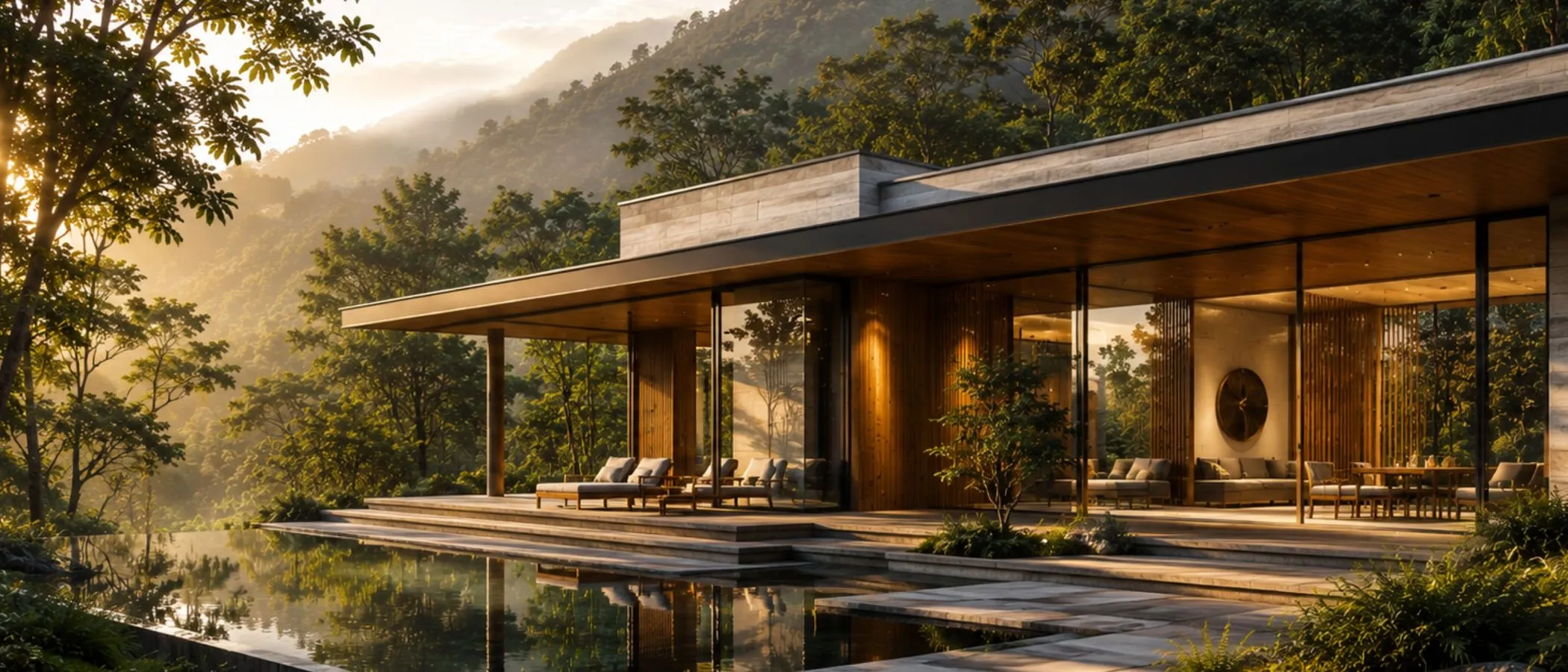
The Future Home as a Health Infrastructure
The concept of home is undergoing a profound transformation. It is no longer just about comfort or aesthetics, but about creating environments that actively contribute to the health, emotional balance, and quality of life of those who live in them. According to the Global Wellness Institute, the market for properties designed with a focus on wellness is expected to exceed one trillion dollars by 2029, establishing itself as one of the most relevant trends in the luxury real estate sector.
The concept of home is undergoing a profound transformation. It is no longer just about comfort or aesthetics, but about creating environments that actively contribute to the health, emotional balance, and quality of life of those who live in them. According to the Global Wellness Institute, the market for properties designed with a focus on wellness is expected to exceed one trillion dollars by 2029, establishing itself as one of the most relevant trends in the luxury real estate sector.
Four architectural and design approaches stand out in this new scenario and deserve special attention in sophisticated residential projects:
Primal Architecture
This trend places the human nervous system at the center of the creative process. Instead of prioritizing just the visual, the design seeks to generate an instinctive feeling of safety and belonging. This is achieved with soft, indirect lighting, natural tactile materials, excellent acoustic control, generous ceiling height, and fluid circulation between spaces. The result is spaces that naturally calm, reduce daily stress, and promote a deep sense of protection.
Neuroarchitecture
Combining architecture with neuroscience, this approach uses scientific data — such as monitoring brain activity and physiological responses — to design environments that truly impact mental well-being. Every decision, from the choice of colors and textures to spatial configuration, is made based on how the brain and body react to these stimuli. The goal goes beyond beauty: to create spaces that foster concentration, deep relaxation, and emotional balance.
Healthy Materials and the Elimination of Microplastics
With increasingly energy-efficient homes, indoor air quality has become a central concern. Common synthetic materials in carpets, upholstery, and coverings release microscopic particles that compromise long-term health. The answer lies in the conscious adoption of natural materials like solid wood, stone, ceramic, wool, cotton, and linen. This choice is not just aesthetic — it is a decision that protects the family’s health by eliminating pollutants at the source rather than merely attempting to filter them later.
Circadian Lighting
The technology that replicates the natural variation of light throughout the day has already established itself as an essential element in high-end projects. Able to adjust intensity and color temperature according to the human biological rhythm, it significantly improves sleep quality, regulates mood, and enhances overall well-being. It is especially effective in spaces without natural light, such as bathrooms, basements, and interior offices.
In luxury residences, these solutions have ceased to be differentiators and have become basic requirements. The contemporary client, increasingly aware, no longer seeks just a beautiful home — they expect an environment that cares for them and their family on every level.